

The Beginning of TFS
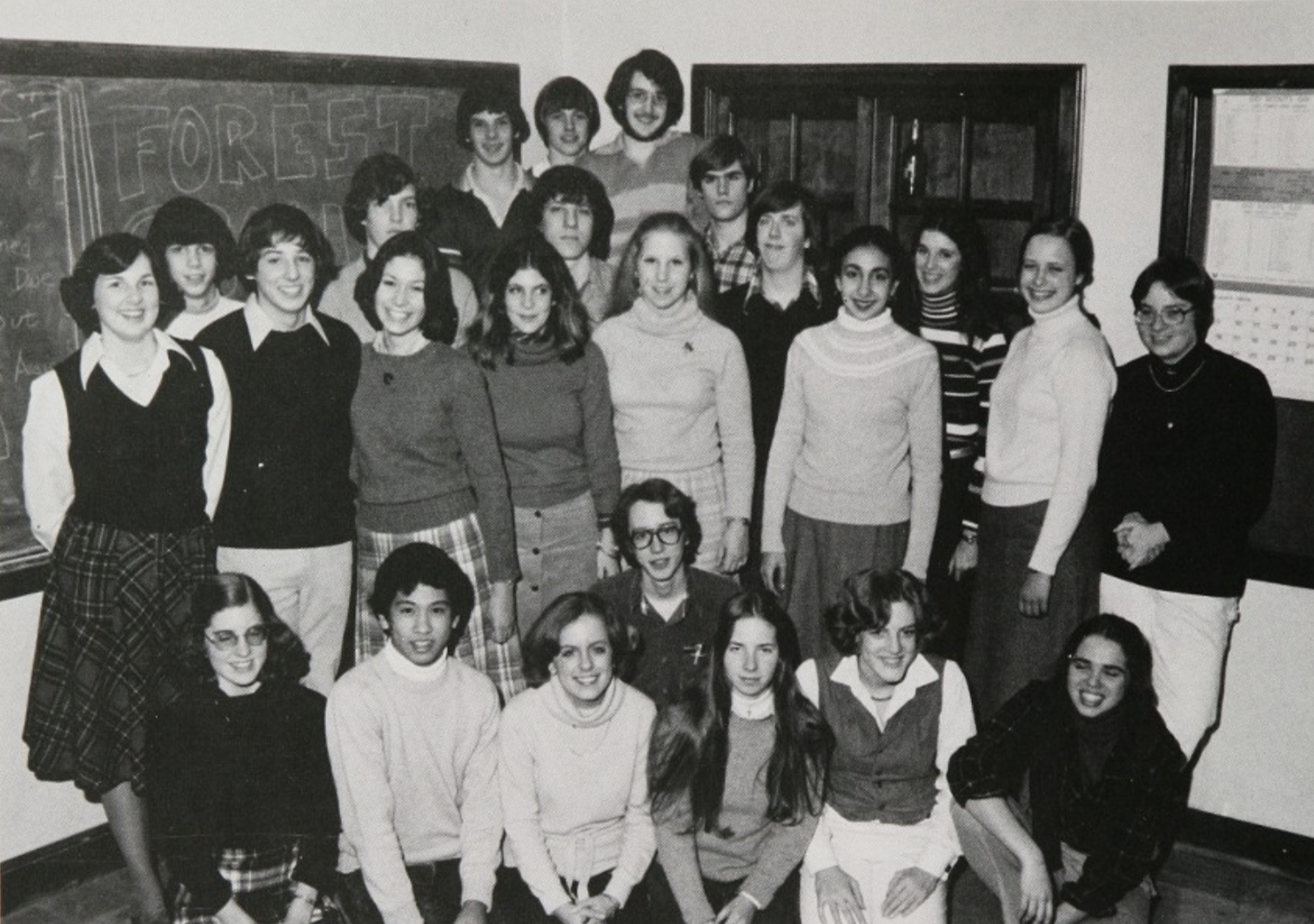
The Forest Scout (TFS) was founded in 1938 by Theodore Calvins, who was the head of the English Department at the time. The newspaper’s staff consisted of about 40 members who put out one issue on a monthly basis. In Lake Forest High School – the First Thirty Years, it was written that the creation of the school newspaper created unity and friendship among the students and teachers during this time. Around the same time, LFHS established a literary magazine called Young Idea, where “students could publish their original literary compositions.”
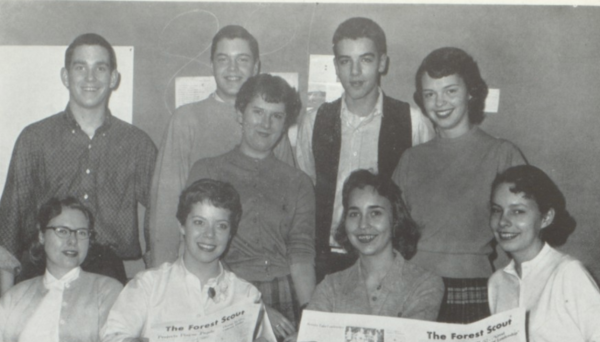
One of the first opinion pieces published in TFS discussed World War II. In September 1939, following Germany’s invasion of Poland, an editor for TFS published a piece arguing that Americans should give more grace to both France and England.
“It is undeniable that these countries have committed many grave and serious mistakes,” wrote the editor. “Yet we should not be too quick to criticize those who are faced by such appalling problems and perils.”
Later in the article, the editor outlines possible strategies for ending the war by Spring 1940. In reality, the conflict would continue for another five years, shaping both the world and the experiences of students at LFHS.
Still, the author concludes with a compelling point that remains to be true today, emphasizing that strong democracies must maintain both trust and faith in each other. The editor warns that without this mutual confidence and a firm belief in democratic principles, nations will not be able to endure the pressures of rising dictatorships.
The content produced during these early years of TFS provides current LFHS students with a unique window into the concerns, interests, and voices of the past generations.
TFS Covers LFHS in the 70s
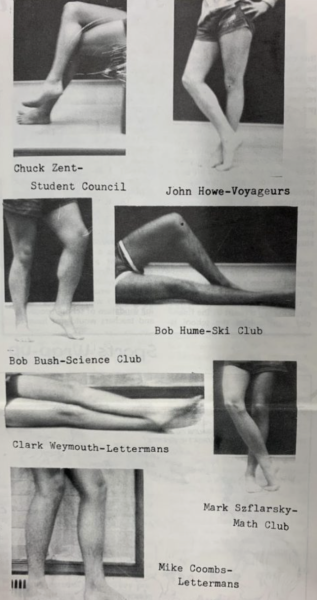
A few decades later in the late 1970s, TFS was still actively posting content. In 2019, Sandy Roadcap, a former editor for TFS, discovered a collection of old articles in her attic, almost 50 years after graduating from LFHS. Many of the stories she found are unlikely to appear in today’s publication.
For instance, the 1975 cover page of one issue featured photos of “the most handsome pairs of legs” in school, as voted on by the students. Other articles included pro tips for being a “cool” freshman––such as getting a fake ID to gain access to the senior lounge or wearing an older sibling’s letterman jacket––and pieces addressing a lack of school spirit, a topic still relevant in coverage today.
Believe it or not, one story even detailed the brief closure of the smoking lounge after students failed to keep it clean, and the dean voiced concerns about what substances students may have been using beyond cigarettes.
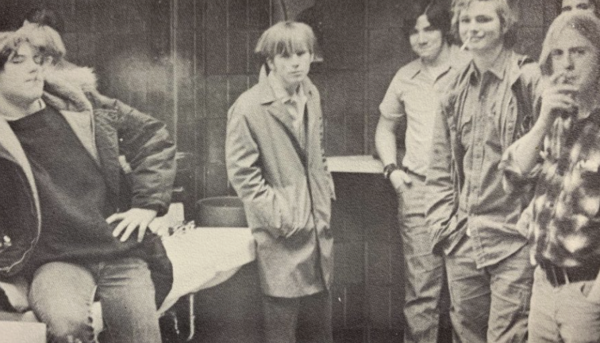
Yes, you read that correctly: in the 70s, LFHS had a smoking lounge, and TFS covered the best pairs of legs in school.
A Shift in The Early 2000’s
Fast forward to the early 2000s, specifically in 2009, when English teacher Mr. Lance Ferges remodeled the after-school Journalism club by turning it into an in-school English elective. This process began when Former Principal Jay Hoffmann approached Mr. Ferges and asked him to research what producing the paper as a class would involve, particularly considering printing costs.
Initially, the course had very small sections and required much work outside of class, so some students continued working on the paper in a club format after school hours––though that model didn’t last very long. After several iterations of the Journalism program, Mr. Ferges, alongside former English teacher Mrs. Swann, developed the curriculum and created the course’s most effective structure.
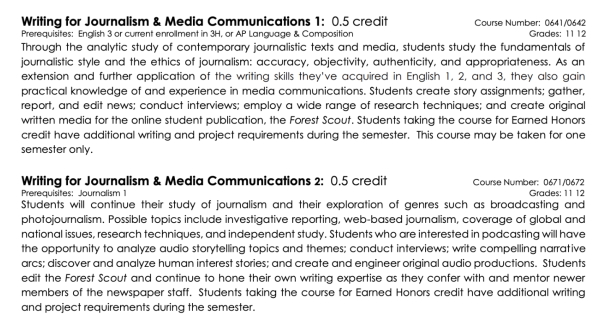
“One of my earliest students worked in his woodshop class to design and build the print newspaper stands that are still scattered around the school today,” Mr. Ferges said. “As the popularity of the course grew, I added an earned honors credit. I taught the course for seven years out of a tiny room in the basement,” Mr. Ferges said.
In 2016, after introducing an online website for TFS––accessible via QR codes that would appear in the print version––Mr. Ferges shifted his focus to AP Literature.
When former LFHS teacher Mr. Austin Scott took over teaching the course in 2016, he revitalized the journalism program by transitioning the school newspaper into a fully online format, bringing a new identity and expanding its reach.
The transformation began in the spring of 2016, when its rise from a traditional print newspaper to a dynamic online platform was fueled by staff and students with vision, passion, and a drive to showcase authentic student voices on a larger scale. As a result, the print paper was limited to just a few special editions produced throughout the school year.
“We collectively chose to change the format of The Forest Scout, knowing that cultivating a platform where students could express themselves freely and flex their writing and argumentative skills would be something that could organically grow the enrollment and success of the newspaper,” Mr. Scott said.
Almost immediately after TFS was officially launched as an online newspaper, it began thriving on growing social media platforms like Instagram and YouTube, where people could repost TFS content on. In the beginning, stories ranged from Outfit of the Day posts and playlists to anonymous “ghost” stories and sports coverage. The focus was clear: TFS wasn’t about world issues or global politics—it was about showcasing high schoolers’ perspectives about local topics.
“We had such strong writers and such a demand, but we only had one class: it became hard to keep up with the growing pace reasonably and not overwhelm the students, but everyone played their role and kept to their routines,” Mr. Scott said.
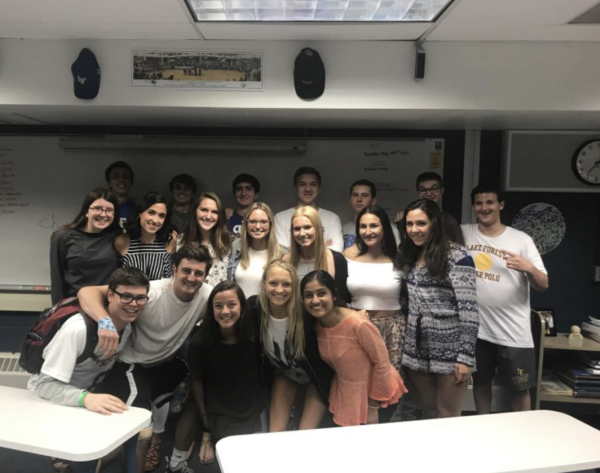
Mr. Scott ultimately credits the success of TFS to the students who helped get the newspaper off the ground in its formative years as a website. One of them was 2018 graduate Grace Scheidler, who had Mr. Scott her freshman year in her Interdisciplinary Studies class and became one of the first students recruited to take journalism; as a sophomore, she was asked to be the very first Editor-in-Chief of the online version of the newspaper the following year.
“In my junior year, our cohort writing for The Forest Scout had very passionate people–students who were empowered and confident to produce content in their areas of specific talent. For me, being part of the first group to take journalism after the paper transitioned online and helping shape it into something uniquely our own made it such an impactful experience,” Scheidler said.
Today, when Scheidler looks back on her time at LFHS, one of the things that immediately comes to mind is her experience in journalism and the future opportunities that were created from writing for TFS.
“It makes me feel really old to be speaking about this–– it’s really such a positive memory, and it was such a positive space for me at the high school when I was there. Through writing for The Forest Scout, you got to explore the extent of your 16 to 18-year-old mind in terms of thinking critically,” Scheidler said. “It became a launching pad for choosing my college, major and thesis–– all of which stem from the foundation I was given in high school to explore and develop my skills.”
Mr. Scott explains that the coverage on TFS focused on what mattered to high school kids, both the heavy, important stuff and the borderline brain rot. TFS could do both.
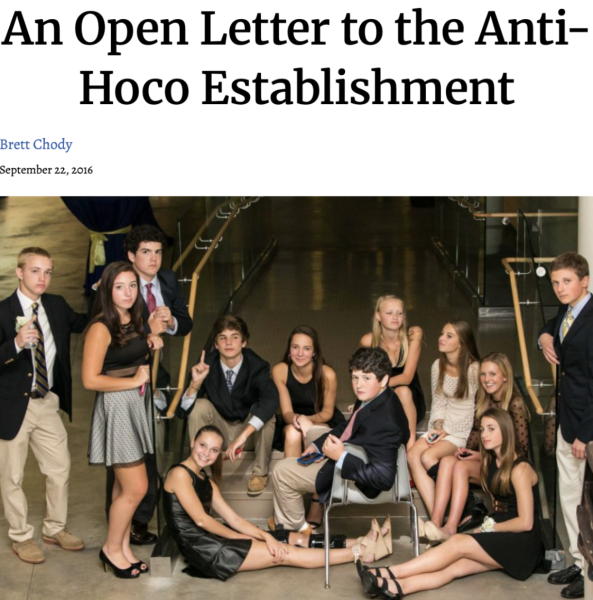
Despite focusing on local issues, certain stories reached thousands of screens. 2018 graduate Brett Chody advocated for staying at the Homecoming Dance in her article“An Open Letter to the Anti-Hoco Establishment.” In just two days, her article went viral, being shared, reshared, and ultimately gaining 35,000 views. After that, Mr. Scott saw “the flood gates open.”
More staff writers began to publish their opinionated or controversial stories like Chody’s. The subsections like “In The News,” and “In Between The Lines” kept TFS engaging, but it was the “In Our Opinion” section that really drove the content in its first years.
“Parents loved it, we marketed it to the whole student body and staff in a Friday email, and we were just learning to fly while building the airplane. It was a really interesting time,” Mr. Scott said.
It was during these foundational years that many of TFS’s signature series––such as Commons Knowledge, The Daily Dose, and The Friday Five––were created. Students like 2018 graduates Chris Cavalaris and Charlie Slides developed Commons Knowledge, while Kyle Wix mainstreamed The Daily Dose. These early features later inspired The Friday Five, designed to give readers a weekly segment they could anticipate––and maybe even see someone they knew featured.
Looking back now, these features remain notable for their longevity and the overall engagement they brought to the student publication. As new generations of students take over, each feature continues to evolve, keeping the intent and the spirit of the original segments alive while adapting them to the current LFHS student body.
It was the dedication of Mr. Ferges, Mr. Scott, and their driven students that has shaped TFS into what it is today.
Current Day TFS Publication
Mr. Glen Leyden spent six years working as a journalist for newspapers in Chicago and the suburbs, while also teaching journalism classes at Homewood Flossmoor High School, before he started teaching at Lake Forest in 2018. After Mr. Scott left for another position at Hersey High School, Mr. Leyden was hired.
Coming into his new role, Mr. Leyden’s focus was simple: how do we make this paper even better? To him, that meant highlighting stories of the LFHS community that readers couldn’t get anywhere else––covering the people, events, and trends that mattered most to TFS readers.
“I was really impressed with The Forest Scout from the start. The amount of support from the community, teachers, administration, and students is incredible. That’s a testament to the community and the hard work put in before I got here,” Mr. Leyden said. “So I was lucky: a lot of the most challenging work––building a brand and readership––was already done. So, I was free to focus on ways which I could use my background in journalism to help students improve as reporters and writers.”
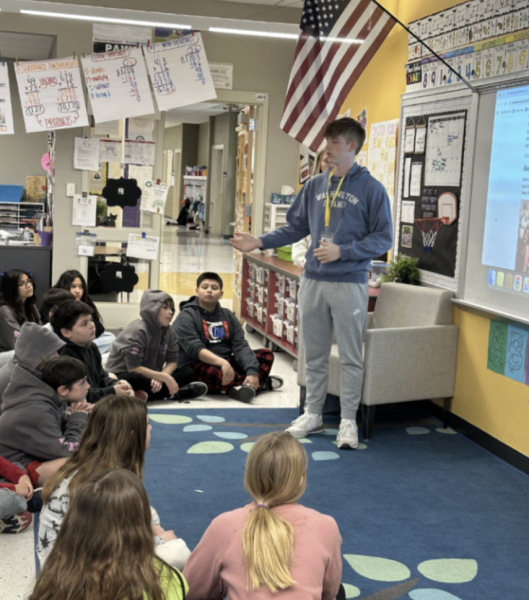
As the journalism program continued to grow, more students joined, requiring additional classes to be made available. Mr. Raymond Del Fava joined Mr. Leyden as an advisor of TFS in 2019, teaching a third section of journalism classes.
A typical day in journalism class combines individual work time with mini-lessons on how to format stories, integrate quotes, and practice ethical journalism. One unique aspect of the class is that students set their own deadlines for the content they produce. This structure allows students to be creative and write pieces that are meaningful to them, rather than writing assignments chosen for them.
The advisors also teach students how to find credible information to include in their articles amid the abundance of misinformation circulating the media.
“The current teachers have done an exceptional job teaching the way [should] students interact with information in an online digital world,” Mr. Ferges said.
Additionally, in today’s society, the rise of AI has made people question the authenticity of journalism, and many of the newspaper’s staff writers have questioned whether or not they should continue to pursue journalistic endeavors.
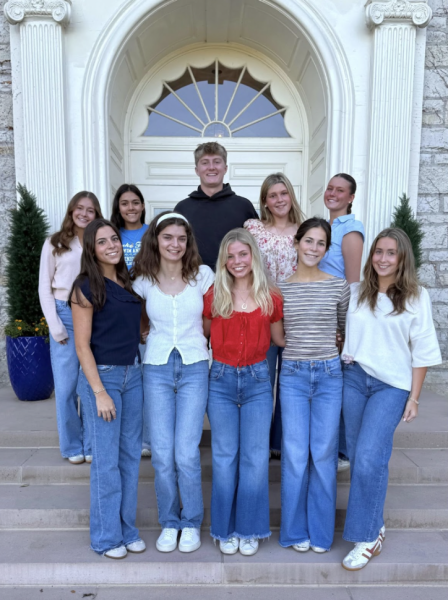
“When I was deciding on what I wanted to pursue as a major in college, journalism and how it is evolving crossed my mind,” senior and TFS Editor-in-Chief Lizzy Grace said. “At first, I was nervous about entering the field, but through LFHS’s program, I have learned that the genuineness and legitimacy that are associated with journalism are still very real. I am eager to see how it develops in the future as I pursue it as a journalism student.”
After gaining experience in social media management, Scheidler emphasizes the ongoing importance of media in modern society and how the legacy of TFS reminds students of the enduring value of human storytelling.
“I feel like a lot of people believe that with how journalism has intersected with AI, it’s soon going to be the death of traditional journalism. However, I think it’s more important than ever to continue to use spaces like TFS to connect yourself with the community and have stories written by community members. People don’t want stories written by AI, they want a human connection,” Scheidler said.
Over time, many have attested that the generations of editors, staff writers, and advisors have successfully upheld the reputation of TFS as a publication. While the platform has changed substantially over time, one thing has remained constant to the community: TFS plays a role as a central hub for local news, culture, and history.
“If you wanted the pulse of LFHS, the school newspaper was the first place to look. TFS made sharing your writing cool culturally in Lake Forest, and I hope it still is,” Mr. Scott said.





Emma Stadolnik • Dec 1, 2025 at 9:44 am
This is awesome and very well-written! Such a good read!
Cece Gordon • Nov 21, 2025 at 10:29 am
I’m obsessed love this
Shea Milliman • Nov 21, 2025 at 9:27 am
So well written, Anna!!
Marissa Graham • Nov 21, 2025 at 8:53 am
Amazing article Anna!!!!
Austin Scott • Nov 21, 2025 at 8:40 am
Really nicely done, Anna. Love the historical framing at the beginning. It is evident that your own journalistic skill is on par with the legends you mention from TFS’ past, like Grace, Elizabeth Porter, Brett, Kyle, and the many others before them who helped cultivate the readership of the paper. Cheers to you and your current staff. Personally, I am humbled and honored to be mentioned in the illustrious company of the other teachers of Journalism at LFHS like Mr. Calvins, Ms. Swann, and Mr. Ferges.
All the best to TFS!