Most students are not excited to stroll the aisles of Home Depot at 9:30 p.m. on a Friday, but for the seniors tasked to build a boat for physics, it’s all just part of the process.
The goal sounds simple: take cardboard and build a boat no longer than 8 feet from it. All you have to do is make it float, right? How hard could that be? But this assignment quickly turned into a hands-on lesson in physics, and a test on how much you really can trust your peers.
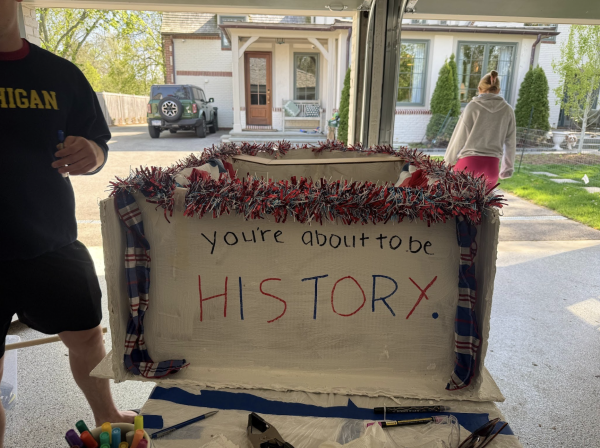
Groups consisted of four seniors each. They were all given the same amount of cardboard and from there it was all up to their imaginations. Every boat reflected the personality of their team. Some boats featured sleek designs, while others embraced humor. Clever names were painted on the side of the boat, lots of them in ode to their teachers.
The preparation for this event is intense. It’s not something to start the night before, or even the week before. But for some teams, that had to be the case.
“During our boat conference a week before the race, we realized that the caulk and waterproofing we used did not work well together,” said senior Claire Borega. “With the race only being a week away, we had to redo the entire boat. It all ended up working out and we won the fickle finger award.”
The process starts two months before the race even takes place. This amount of time allotted allows for groups to go through lots of trial and error.
“It was really fun working with the other girls in my group. We spent a lot of time outside of school building on it and we became closer throughout the process,” said senior Alissa Eglite.
Students don’t build the whole entire boat right off the bat; they start small and keep learning. Weeks before, you’re entrusted to make a handheld prototype of what your boat will look like, and test its waterproof ability in a tub of water.
Contrary to belief, you’re not just graded on if your boat makes it to the finish line. While that takes up the majority of your points, teams can earn points through journals and other conferences.
“According to the rules, and there’s a lot of them, hand paddles are illegal. Our group had to pivot very quickly after our meeting with (physics teacher) Mr. Wilen when we realized we could not use them,” said senior Maddy Cummins.
Once the boat is built, it’s time to put it to the test. Even if you spent two months building and perfecting it, there’s only one moment that really matters: race day.
The long awaited day consists of two challenges.
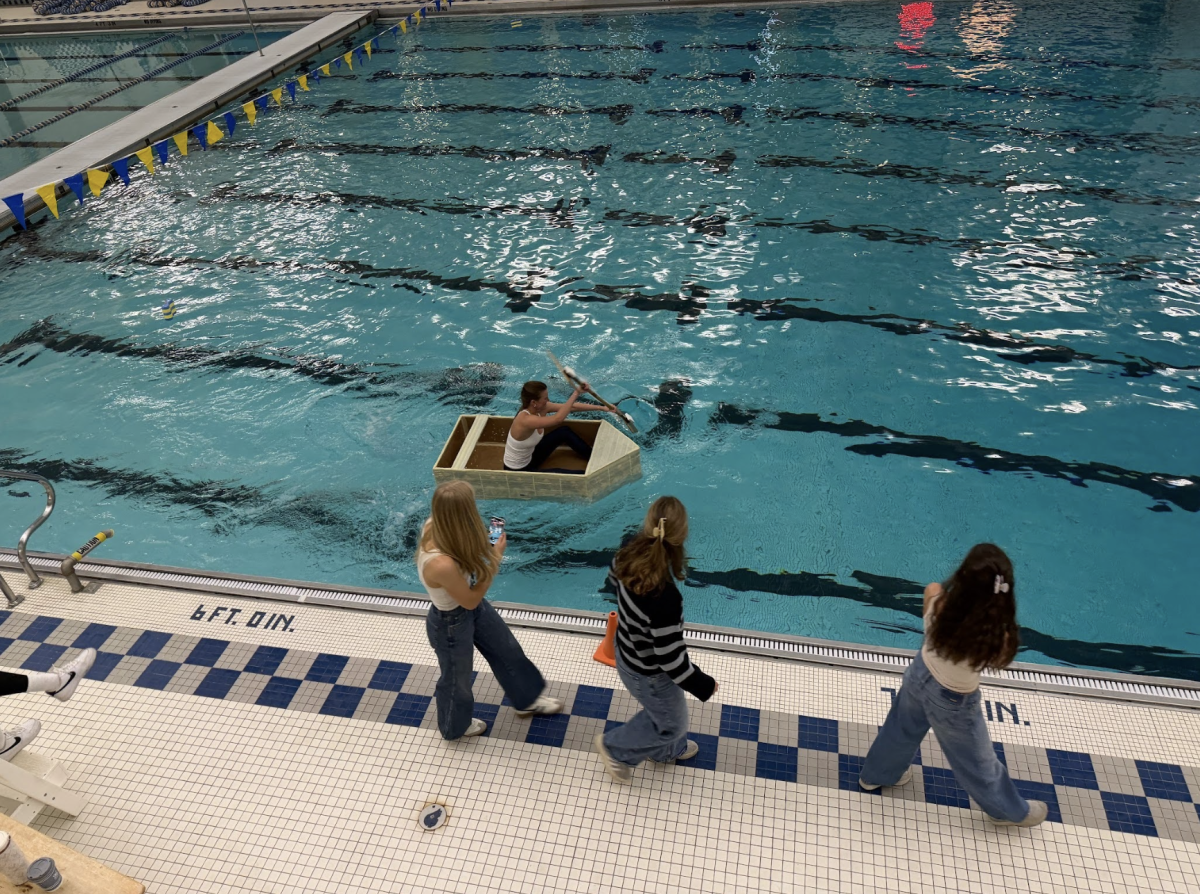
First, the lap around the pool is timed and stacked up against all the other boats. If a vessel is still intact after treading water for at least two minutes, it can participate in the actual race.
Competitors must touch the end of the pool, turn around, and race back. The first person to get back wins the race. Extra credit is awarded to first, second, and third place.
On Monday, the pool deck was humidly filled with anticipation and excitement. Teams lined up ready to embark on their lap around the pool.
Some gave out as soon as they touched water and some passed with flying colors.
Unfortunately due to unexpected lightning in the area, some people could not participate in the race at the end.
“We were scared it was going to sink right off the bat. Because if it does, your grade is going to tank. So, there was a lot riding on that first moment when it went into the water,” said senior Eliza Carrabine.
The winning time was 52.01 seconds around the pool, with second place coming in close at 53.84 seconds. Some teams came either very close to that or minutes from.
“The boat races are a great tradition, it’s awesome to see students’ creations and their hard work, hopefully, succeed. This year was one of the best years we’ve had in terms of boats finishing the race,” said Wilen.