
Whether it’s been a counselor, your parents, or even a teacher, you have likely been told to visit colleges; however, when you step foot on the campus of your dream school, it can feel overwhelming.
When you find a place you love, prioritize learning its aspects before determining whether this is where you want to spend the next four years.
Exploring the City/Town
Last fall, I was touring colleges on the East Coast and decided to visit Bates College. Despite Bates having programs that interested me, it was in the middle of nowhere.
Driving around the beauty of Lewiston, Maine during peak autumn foliage was breathtaking, but it didn’t distract me from the fact that there were very few restaurants and stores in the area. I knew that I loved the school, but I also knew that I wouldn’t be able to thrive at Bates because it was too secluded compared to what I’m used to.
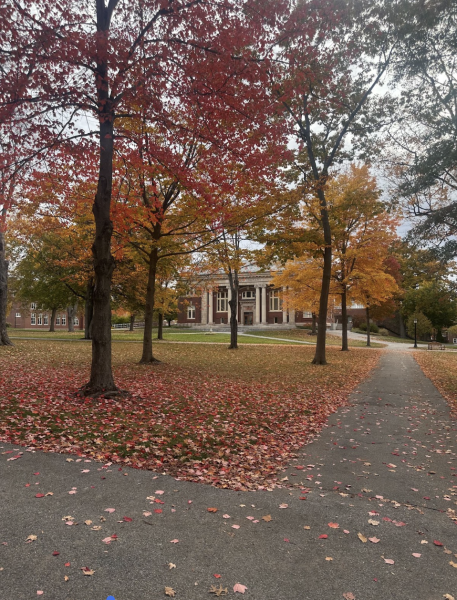
Allowing yourself to explore the surrounding area to see if it is tailored to your interests is vital when touring colleges, since you may believe that a school is for you until you explore the local scene. The town or city where each college is located is where you’ll be spending the majority of your time—so it’s necessary to consider this.
Taking a walk around the outside of campus, grabbing coffee, or dining in the heart of the college’s area is a great way to maximize your visit!
Paying Attention to Student Culture
Touring Occidental College in Southern California last month—my family, friends, and counselors all said that OXY would be “the school” for me. I thought they would be right.
OXY is known for being an artsy liberal arts school, so I assumed it would be the perfect fit for me; however, when I toured, I couldn’t have felt more disconnected from the student culture.
I still don’t understand why I felt this way, though I knew I needed to trust my gut. I was trying to find ways to look past the negative aspects of the school, which made me think deeper and realize that I shouldn’t be making excuses for a school that just isn’t up to my standards.

It’s perfectly fine to be picky when it comes to your education because even small things such as student culture can affect your academic success.
Creating a list of criteria for schools is essential to finding your dream school. So many students end up transferring schools because they didn’t know what they were looking for in a school until they were already in college.
Professors In the Field
So many colleges only employ professors who have spent 10+ years achieving a plethora of degrees with substantial teaching experience.
However, very few focus on hiring those who are actual industry professionals.
When touring Emerson College in October, I experienced how the campus felt innovative and unique, due to the professors having a history as industry professionals.
Despite these educators being much younger than most professors, they were still able to provide incredible insight into their fields, because they have genuine experience, as opposed to professors who have only learned about their field.
Emerson College has connected students with countless unique internships such as those with The Boston Celtics, NBC Universal, and ESPN.
Having professors who have worked, or currently work in the field that they teach in, allows them to find and even create internship opportunities for their students.

Class Sizes
I attended a summer musical theater program at the University of Illinois Urbana-Champaign, where I worked closely with professors, and admired the performance spaces at UIUC. I received a lot of attention through the individual coaching we had during the program; however, I knew that wouldn’t be the case at a school the size of UIUC–its program was just an outlier, as theatre programs are generally very small.
I decided to take the official tour of the school after my program ended to get a new perspective, and I was shocked to find out some of the required first-year classes had upwards of 400 students. I knew I wouldn’t be able to properly learn in a class that massive, so I decided to take UIUC off my list, along with most of the universities similar in size.
All students learn differently; if in high school you have found value in the small class sizes and one-on-one attention, smaller colleges might be the best option for your success. Researching faculty ratios and the number of students in your program of interest can help you determine if a school meets your needs.
Despite only making up four years of your life, college will provide you with a foundation that sets you up for success in the workforce and life.
To make such an important decision about your future you must think critically by reflecting on your personal observations from college tours and deciding which schools meet your criteria.