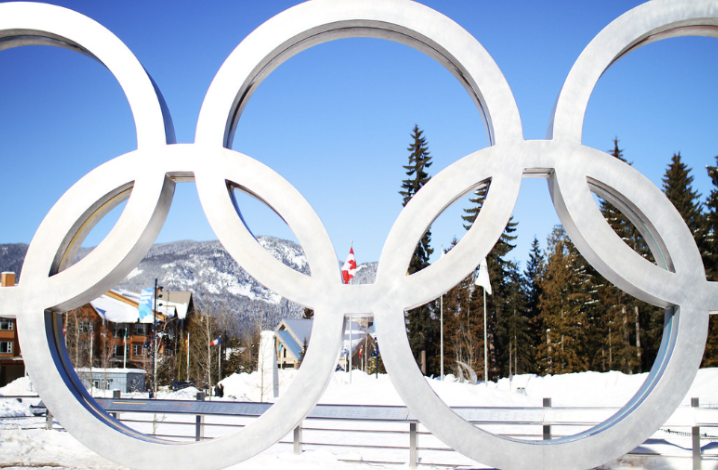
Starting in the French Alps during the 1924 season, the Winter Olympics have been something athletes dream of winning gold in, and viewers look forward to watching ever since its creation. As insinuated by its name, a main component of the Winter Olympics is snow. However, with changes in climate trends, each decade there is drastically less snow.
This year’s 2026 Olympics were held in Milano Cortina, Italy, with the ice events primarily being held in Milan and the snow events spread out in Cortina.
While the Italian alps are cold, they’re warming up. Since 1956, when Italy first hosted the Winter Olympics, there has been a steady decline in below freezing days. According to CNN Climate, In the past 70 years, temperatures have risen by 6.4 degrees Fahrenheit in Cortina. While 6 degrees may initially not seem like a lot, in the long run, it’s a big deal.
The Winter Olympics are rapidly running out of locations to host its games. Currently, the International Olympic Committee says there are 93 potential host locations. Yet, if countries maintain their current climate policies, that number drops to 52 climate-reliable locations for the 2050 Winter Olympics. Even in these remaining locations, artificial snowmaking is necessary in order to maintain a proper and safe environment for athletes.
To make artificial snow, you need cold and dry air. In some places, it has become too warm to even make fake snow or maintain the necessary snowpack for competing conditions.
A critical part of the 2026 Olympics was artificial snow. Organizers prepared 1.6 to 2.4 million cubic meters of snow. However, according to the NBC, 4 years prior in the 2022 Beijing Winter Olympics, virtually all of the snow was man made, marking the first time in history the Winter Games was entirely dependent on artificial snow.
In the 2010 Vancouver Winter Olympics, a climate phenomenon known as El Niño brought record high temperatures with rain before the games. Vancouver had no snow. Its climate was so unstable that they couldn’t even make fake snow. Instead, trucks and helicopters had to bring in snow from higher elevations for the games.
As the Olympics continue to progress, the reliance on artificial snow will no doubt continue as well; but in the long run, man-made snow is simply not sustainable for these games. If climate change continues to worsen, even artificial snow won’t be enough.
To make matters worse, snowmaking requires immense amounts of both energy and water. While some countries have found a way to make the process fossil fuel free, many places have not. So, while artificial snow is a temporary solution to climate change, it also perpetuates it.
Without the right climate conditions, the Winter Olympics will have to make drastic changes to continue its events.
It’s not just the Olympics running out of snow, it’s everywhere, even at LFHS.
When asked about his experience with snowfall, Outdoor Ed teacher Mr. Werner explained how in the early years of his teaching he was able to administer cross country skiing lessons.
“I recall in my early years of teaching, beginning in the 2000’s, our Outdoor Education and Outdoor Adventures classes would have a 6-8 day set of outside cross country skiing lessons. It was common to be able to count on at least a good 3 week chunk of time in late January to the end of February for our classes to go outside to enjoy skiing,” said Werner.
He also recalled being able to teach a unit on building snow forts/shelters during this time.
“The amount of snow that was available allowed us to build several types of snow structures. It has been so long ago that I can’t even recall which years were the last classes to build a fort,” said Werner.
For this school year, Werner revealed that things have changed.
“This winter, I was able to take students outside to ski around Thanksgiving but that has been it, nothing this January or February. I tried earlier this semester to get kids ready to go and by mid week the snow was gone,” said Wener. “I try to prepare students to ‘be ready to ski when it snows’ as we will pause our indoor activities and quickly change into skiing. I’ve done many years of prep and am ready for a year when we can actually change into skis again.”
This year, Illinois experienced significantly less snow fall than average, and it’s only expected to go down. Climate change is making Illinois warmer and wetter. Winter is the fastest-warming season in Illinois, with temperatures increasing 2-3 degrees Fahrenheit over the past 120 years.
Winter activities students were once able to enjoy at LFHS have become a rare occurrence, and winter is only expected to become even more erratic. With such unreliable weather, the way we all navigate winter sports must change drastically.