

Here we are, in 2026. We live in the United States of America, a Republic built on political and civil ideals that have formed our country’s fabric: life, liberty, and the pursuit of happiness. Though recently, this fabric has been torn by division.
Voices advocating aggression, polarization, and hostility have eroded trust and diluted our shared values.
True journalism is about reporting facts, not voicing opinions.
Journalism as an industry has been jeopardized by Americans who question facts because they hold preconceived notions or issues that are framed in ways that create distortions.
This raises the question: what’s behind the increasing bias in our news?
Political socialization is the lifelong process through which individuals acquire political values, beliefs, and behaviors. Their surroundings shape an American’s opinions—whether the influences are friends or family, social media, traditional media, or the news channel they follow. This transmits political culture and influences one’s political participation.
Increasingly, journalists have been reporting in a manner that fits their narrative or a broader, intentional agenda. It has become common for journalists and news organizations to form a specific point of view on a given topic or news cycle and then find “facts” that support their opinion, a phenomenon known as confirmation bias.
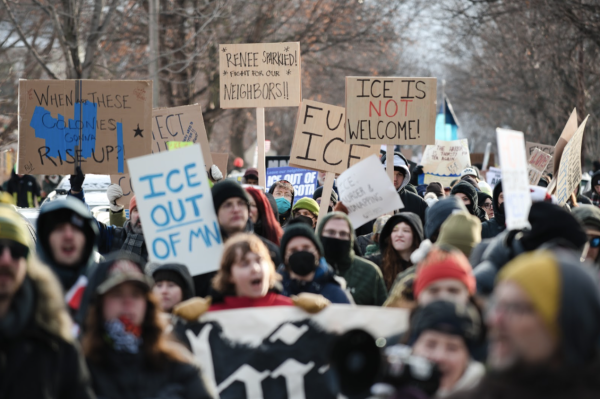
Many Americans amplify their strongly emotionally induced claims towards ICE and their deportations of illegal immigrants during the Trump Administration—unaware that under the prior three administrations before the Biden administration (Obama, Bush, and Clinton), there were far more deportations than in Trump’s first year in office, and for his second term.
According to the CATO Institute, the Obama administration deported more than 3 million people through ICE, the Bush administration deported more than 2 million people, and the Clinton administration deported 850,000 illegal immigrants.
Those amounts exceed the 675,000 deportations that occurred in 2025 under President Trump. If you’ve watched or read any forms of mainstream media over the past month, it’s been flooded with anti-Trump reports coinciding with anti-ICE protests. Yet his actual record of deportations is well below that of Obama.
The facts paint a very different picture than the narrative in mainstream media around ICE and Trump’s efforts to enforce border laws under Article II of the Constitution and the Immigration and Nationality Act
When discussing Trump’s active enforcement of a strong border and the removal of illegal immigrants, should it not also be put in the context that there was little to no effective border enforcement under Biden, and illegal immigration soared during this time?
Politics and public policy often follow patterns in which new policies are created as reactions to earlier ones.
In this case, it would be journalistically wise to reference the surge of an incremental 10 to 11 million illegal immigrants from 2021 to 2024 under lax or no border enforcement under Biden when discussing Trump and ICE’s enforcement actions in 2025 and 2026 (which come as a response to what existed under the prior administration).
At the 2026 Grammys, singer-songwriter Billie Eilish was accepting her award for Song of the Year. Towards the end of her speech, she made a statement that received applause from the audience.
“Nobody is illegal on stolen land,” said Eilish.
Yet the Grammy Award winner lives in a multimillion-dollar mansion in Malibu, California, which is located on the ancestral land of the Tongva tribe, who confirmed that the home sits on their territory, thereby demonstrating that Eilish’s comments were ill-informed and made in a forum that reached tens of millions of Americans.

Young Americans are easily influenced by popular public figures and their political positions—due to their appeal and persuasive nature. These personalities use their fame to encourage their fans to adopt their beliefs and morals—even when their statements are factually incorrect.
Countless actors and influencers, with little to no experience in politics or public policy, are often outspoken about their opinions on politics and world events, yet lack a command of the facts.
Social media has distorted journalism, driven by algorithms that encourage young adults to voice opinions that are not always well supported by evidence. Misinformation is spreading quickly, as quickly as you swipe through your feed, and can become national news before those facts can be verified by real sources.
Recently, Americans have witnessed countless Pro-Palestinian protests across college campuses in the United States over the past year, displaying protestors chanting “from the river to the sea!” However, the vast majority of the protestors couldn’t answer, “Which river?” and “Which sea?”
If one is merely regurgitating something that someone else told them to say, or if they haven’t actually formed their own opinion through fact-based research and understanding, then they aren’t actually voicing their own view. Instead, they become a mouthpiece for someone or something else, and therefore their credibility is diminished.
We are all entitled to our opinions, and the First Amendment guarantees our freedom of speech, though understanding and having full command of the facts and the evidence before voicing such is necessary. Let’s all try to understand the actual facts, be respectful of differing opinions, and allow for free debate.
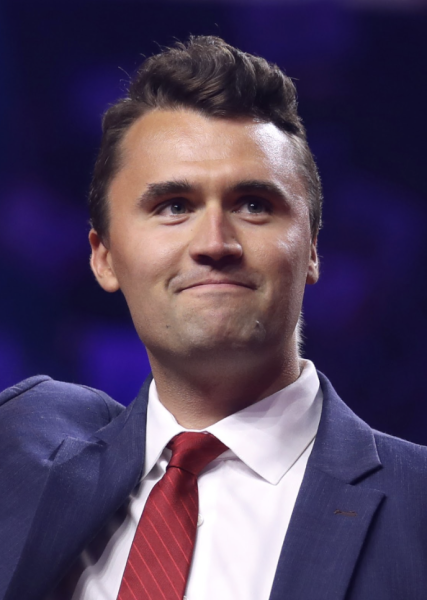
Charlie Kirk established Turning Point USA (TPUSA), a conservative organization, with this same concept and approach at the foundation of his non-profit organization. Kirk encouraged teens and young adults to be well-researched in facts, think deeply about issues, be open to different opinions, and engage in constructive and respectful debate.
Moving beyond emotionally charged rhetoric and beliefs toward well-reasoned, fact-supported perspectives remains a core focus and initiative at TPUSA.
Before Kirk’s assassination in 2025, he traveled around the country and challenged others’ opinions, allowing people to speak for themselves and explain why they believed what they believed. Kirk asked questions that prompted them to think deeply and fact-check their sources.
Consistent with Kirk’s vision, I encourage young American citizens and students to feel a sense of responsibility to motivate our society to become a culture in which everyone’s voice is valued and research is conducted.
Journalism is not about emotional appeal or opinions—it is about the facts, and that is fundamental.
Our country’s First Amendment prohibits Congress from restricting freedoms of speech, press, religion, assembly, and petition. These foundational freedoms provide the opportunity to foster an environment in which we can be knowledgeable and well-informed.
The resources available today make facts readily accessible to anyone conducting research.
What I have gained at this moment in time, as a high school student in an era of division, is that young, informed Americans gain confidence when they possess strong political standing, thereby facilitating overall emotional well-being.
Experience matters, history matters, and every aspect of information matters. Therefore, young individuals should know the facts before expressing an opinion.


peer reviwed • Mar 18, 2026 at 3:12 pm
the argument is really unclear and all over the place. it starts about journalism and political division but then jumps to immigration, celebrities, and protests without sticking to one main point.
it also contradicts itself because it says journalism should be factual, but the whole piece is basically opinion with barely any sources. a lot of claims are just stated without real evidence, which makes it hard to trust.
the tone is also kind of biased and lowkey aggressive, like it’s criticizing division while adding to it.
overall it feels more like a rant than an actual well-argued article.
another critique • Mar 17, 2026 at 9:29 pm
The following is not an attack on the writer nor their opinion but simply a critique intended to expand upon the discussion. This is an in-depth criticism of the MAGA movement and an in-depth analysis of growing American bias, both in the media and the public.
A common critique of modern media simply growing in bias overlooks a more complex sociological reality. The media has shifted as a defensive response to a fundamental change in the American political body. To understand, we need to understand and analyze the emergence of the MAGA movement.
“Make America Great Again” serves as a right-wing slogan that very much mirrors palingenesis – the idea of national rebirth after decadence, a world used to denote fascism down to the idea of the restoration of national identity as highlighted in The Nature of Fascism by Roger Griffin, a British professor, written in 1991.
MAGA’s loyalty towards Donald Trump very blatantly mirrors Mussolini’s “Il Duce persona,” where a cult of personality presented Benito Mussolini as a superhuman leader of Italy, with the term being derived from the latin word “dux” which was used by Roman Generals – keep in mind that Fascist Italy’s goal was to bring about the return of the Roman Empire. This led to Mussolini’s most famous slogan “Il Duce ha sempre ragione!” or translated, “The Duce is always right!”
But to stick to the point, fascism in itself is one that commands complete obedience to the state. A good citation from Mussolini’s doctrine of fascism to use: “The Fascist state is a will to power and empire.” The quote argues the state serves as a spiritual and ethical entity, arguing that the leader gives the state the necessary direction and guidance, and eventually the leader’s totalitarian power, which also leads to one of Mussolini’s most famous quotes about Fascism, and quite a long one as it is his most famous comment on democracy.
“Fascism is therefore opposed to that form of democracy which equates a nation to the majority, lowering it to the level of the largest number; but it is the purest form of democracy if the nation be considered as it should be from the point of view of quality rather than quantity, as an idea, the mightiest because the most ethical, the most coherent, the truest, expressing itself in a people as the conscience and will of the few, if not, indeed, of one”
-Doctrine of Fascism, Page 2, Courtesy of San Jose State University
Up until now, I’ve mainly been defining fascism, but to reinforce the connection between the MAGA movement and contemporary fascism, we need to understand that MAGA can also be described as a populist movement, with Trump being a populist leader. The problem with the term “populism” is that in its own definition, it is a very thin-centered ideology that can be filled with any kind of values. Historians maintain that the Doctrine of Fascism itself transitioned from populist rhetoric to totalitarian control, with the March of Rome weaponizing populism and the Acerbo Law using a populist mandate to rig the system in favor of Mussolini, granting Mussolini two-thirds of the seats in Parliament by passing a law ensuring that his party received the most votes no matter what. Anyone who stood against him was notably murdered, as highlighted during the Matteotti Crisis in 1924 where socialist leader Giacomo Matteotti exposed the regime’s election fraud and was assassinated.
Adolf Hitler also followed a similar playbook. He used populist values to appeal to the citizens of Germany, with his foundation “Germany Awake!” being used as a populist slogan for the early Nazi party. It identified the popular scapegoats, notably jewish people and communists, and presented himself as a messianic figure who would restore national pride and rebuild the economy. Much akin to Mussolini popularizing himself as a Roman warrior who would restore the Empire, and Trump as the figure to “make America great again.”
A popular example to be used is how Hitler never committed a coup. His legal revolution actually very well mirrors January 6th, so let’s explore this. Following his appointment as Chancellor, a month later the Reichstag fire occurred, an arson attack on the parliament building, and Hitler convinced the president to sign an emergency decree to suspend civil liberties such as the freedom of press and assembly. And through the enabling act passed in March 1933, Hitler was given power to enact laws without the consent of the parliament, ending the Weimar republic. Obviously Jan 6th and the Reichstag fire aren’t direct parallels, but there are parallels. The most notable one was the symbolic target being the legislative branch. Jan 6th was a deliberate attempt to disrupt the Electoral College certification, attempting to stop peaceful transfer of power that is fundamental to the constitutional order. The only reason the outcome never remained the same was due to American institutions and the institutions of the German state in 1933 working fundamentally differently, allowing America to sustain a coup. Observers such as General Mark Milley warned that the chaos could be used as a “Reichstag moment,” a pretext to invoke the insurrection act, declare martial law, and keep the leader in power despite losing an election.
Now specific correlations to Trump on whether or not he was involved in Jan 6th is not conclusive so there will be no comment made on this.
Other points to be used is the aestheticization of politics shared between Mussolini and Trump. Mass rallies now evidently serve to create tribalism and partisanship rather than political actors within a democracy, and make supporters feel a sense of defending their nation against an external group. Mussolini notably staged photos of himself threshing wheat or practicing sports, akin to MAGA utilizing photos of Trump being “a man of the people.”
Dehumanization is also a common point, with a notable citation from Trump referring to undocumented immigrants as “animals,” stating “We have people coming into the country, or trying to come in…you wouldn’t believe how bad these people are. These aren’t people. These are animals.” Now there must be a consensus on dehumanization, as some take it as a final word of description, but don’t truly understand that dehumanization is a bar that can be lowered to describe even the most minor of crimes. Sociologists argue that once a label is introduced, it bleeds over to the entire group, making it easier for the public to accept harsh treatment. In terms of academic census, Gregory Stanton’s “10 stages of genocide” is a gold standard in sociology, citing that dehumanization is the fourth stage of genocide. It is the critical psychological prerequisite for violence, and when the people are convinced that “these aren’t people,” the moral bar vanishes and the state can act unrestricted because rather than harming humans, they are in a state of threat repulsion. A notable example from Nazi Germany to be used is the Untermensch, a 52-page pamphlet from 1942 that showed subhuman depictions of Russians and Jewish people, stating that they were a “lower biological creature” that only looked human. Another Nazi metaphor commonly used was Ungeziefer, or Vermin, labeling Jewish people and Romani’s as vermin, with their removal a matter of public hygiene rather than murder.
But to finalize matters on the media, it isn’t a question of whether the media is biased or the people think it is because the answer is it is both biased and people think it is biased. This interaction is the key of the fascist playbook — the goal isn’t to make people believe in a lie but to create confusion and lead them to distrust everything, with leaders utilizing technology to tell their followers to listen to the leader rather than the media. The decay of truth was notable in Hitler’s eara, where he used the radio and denounced the media by referring to them as the “Lugenpresse,” or “lying press,” with the goal of de-legitimizing the media and portraying them as untrustworthy. To correlate this back to Trump, Trump’s presidency fundamentally changed journalism. His rhetoric was so radical, mirroring historical fascist patterns, that outlets openly felt that neutrality was an impossibility, arguing that telling the truth is in fact biased to those who support the leader. Because of this, by 2018 the polls showed that 91% of strong Trump supporters trusted him for accurate information rather than the media. The trust gap is not accidental, it was Trump’s deliberate campaign to frame any critical reporting of him as a partisan attack.
A couple of citations to make. In Journalist Marvin Kalb’s Enemy of the People, he argued that Trump’s attacks on the press created a dilemma for journalists. Outlets found it impossible to be unbiased in an environment where the leader was branding the independent media as the opposition.
The Atlantic in 2018 argued that the media cannot kill misinformation, arguing that a shift toward aggressive contextualization was the next step to take.
Among others, such as the NYT and Columbia Journalism Review, argue that the truth is now a partisan issue.
The result of turning this interaction between media trust and media bias has resulted in bias becoming a matter of perspective rather than bias itself. A report on the leader is unfair bias, but the critic sees it as essential accountability, but the leader controls a public that cannot agree on basic facts and makes the public easier to control.
So to conclude, the situation with the media is not a matter of confirmation bias. That’s just the consequence of it. The media appears more biased simply because it is in a war against a leader of the state that promotes tribalism over unity.
just a critique • Mar 17, 2026 at 1:18 pm
First, the thesis is vague and shifts. The opening suggests the article will analyze political division and media bias, but it never clearly states a focused claim. Instead, it drifts between multiple ideas: media bias, immigration policy, celebrity influence, protests, and free speech. A strong article would commit to one central argument (for example: “media coverage of immigration is distorted by confirmation bias”) and consistently build evidence around that. Right now, it reads more like a series of opinions loosely tied together.
Second, there is a contradiction at the core. The writer claims “true journalism is about reporting facts, not voicing opinions,” but the entire piece is an opinion column. That’s not inherently wrong—opinion journalism exists—but the writer doesn’t acknowledge that distinction. Good journalism differentiates clearly between reporting and commentary. This piece tries to position itself as objective while using persuasive language, which weakens credibility.
Third, sourcing is inconsistent and sometimes misleading. The article briefly cites the CATO Institute but provides no links, context, or comparison to other sources. It also makes large claims with no evidence, such as:
“little to no effective border enforcement under Biden”
“illegal immigration soared”
“10 to 11 million illegal immigrants from 2021 to 2024”
These are highly specific and politically charged claims that require multiple credible sources (government data, nonpartisan research, etc.). Without that, it reads as assertion rather than reporting. Selective statistics (e.g., comparing deportations across administrations without context like policy differences or timeframes) also suggest cherry-picking.
Fourth, the tone becomes openly biased and occasionally dismissive. The section about Billie Eilish shifts from media critique into a personal attack that doesn’t meaningfully support the main argument. Similarly, the claim about protestors not knowing “which river, which sea” is anecdotal and generalized. These moments feel rhetorical rather than analytical and contribute to the divisiveness the author claims to criticize.
Fifth, the structure lacks logical flow. The article jumps between topics without clear transitions:
media bias → immigration stats → celebrity commentary → social media → protests → TPUSA → personal reflection.
A strong piece would organize ideas into clear sections that build on each other, not pivot abruptly.
Sixth, there are factual credibility issues that seriously undermine the piece. For example, the claim about Charlie Kirk being assassinated in 2025 is not accurate. Including incorrect information at that level damages the writer’s reliability across the entire article.
Finally, the conclusion is generic and doesn’t resolve the argument. It repeats broad ideas about “knowing the facts” without tying back to a clearly proven claim. A good conclusion should reinforce the central argument and show what the reader should take away or reconsider.
The Forest Scout • Mar 18, 2026 at 9:58 am
Thank you for the response. One quick suggestion:
When asking AI to think and write for you, it’s important that you review what it provides you because AI can make factual mistakes. For example, the AI that you asked to think and write for you was unaware that Charlie Kirk was assassinated. So when you copy and pasted the information from AI, you mistakenly left in the line that says,” Sixth, there are factual credibility issues that seriously undermine the piece. For example, the claim about Charlie Kirk being assassinated in 2025 is not accurate.”
peer reviewed • Mar 18, 2026 at 3:10 pm
whachu make ai generate that response it doesnt help with the fact that the argument is weak and lacks logical flow with random personal remarks and no factual evidence