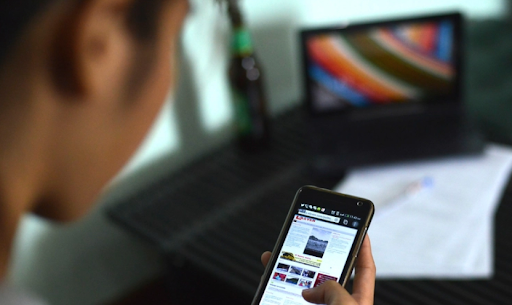
Social Media is an inevitable part of many students’ lives. With it playing such a prevalent part of our culture, sometimes it feels almost impossible to escape it.
But how much of our time is really spent on social media? According to the American Psychological Association, the average U.S. teenager spends 4.8 hours a day on various social media apps. That’s 33.6 hours a week, 134.4 hours a month, and 1752 hours a year. In other words, teens spend the equivalent of roughly 73 full days each year scrolling on their phones.
We spend one-fifth of our time each year on social media. Students sacrifice their valuable time at home for these apps instead of homework, studying, or doing anything productive.
But, why? Some students have no desire to quit; they don’t realize the magnitude their addiction has on their lives. On the other hand, many students want to quit, but just don’t know how.
Social media is designed to be addictive. Dopamine is the main chemical involved in addiction, and according to Stanford Medicine, when we use social media apps, large amounts of dopamine are released into our brains’ reward pathway all at once–the same way heroin, meth, or alcohol do.
Our brains aren’t capable of processing the millions of comparisons we see in the virtual world. It gets exhausting comparing oneself to the ‘perfect’ people only seen online. Eventually, we give up trying, and often fall into depression. This is what neuroscientists call learned helplessness.
When we turn off our phones, the brain goes into a dopamine-deficit state as it scrambles to adapt to the abnormally high levels of dopamine that were just released from social media usage. This is why it feels so fun when we do it, but so awful when we log off.
The best way to quit is to develop awareness surrounding the issue. Take a look at how much time you spend on apps each day to help understand the severity of the situation.
Whether it’s drugs or social media, about a month is often considered the minimum amount of time needed to reset the brain’s dopamine reward pathways. If you can’t commit to a month yet, even a timeout for at least a day can still help.
This month-long fast will decrease the anxiety and depression users feel as well as increase our ability to enjoy more modest rewards again.
When returning again, we can practice healthy social media usage habits without getting sucked back into the vortex of addiction again.