

It is a Saturday night. You are home in your bed and scrolling through your phone. All the sudden, a post comes up, gracing your screen with images of people in your grade at a party. Before you know it, you are clicking through the profile pictures of the people at the party; now, you are doomscrolling.
Doomscrolling has become a major issue for teenagers–and even some adults–who spend hours on social media. It seems that the few teenagers who aren’t addicted to their screens are those who have taken drastic action and deleted all social media accounts.
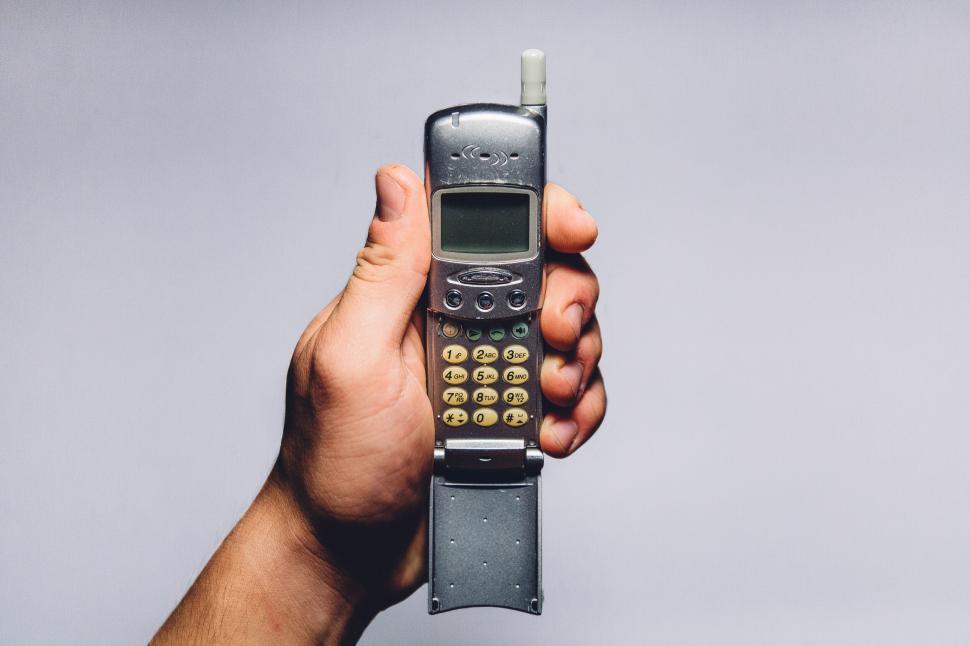
As much as deleting social media may seem to be the solution, it is just not realistic. That’s usually the moment when adults chime in with their own solution: bring back the flip phone. Some parents frequently reminisce about how, “back in their day,” having flip phones was so much easier: there was no Life360, no social media pressure, and, yet you could still communicate with friends and parents. This nostalgia, combined with the fact that flip phones cannot be monitored, has some teens to experiment with giving up their smartphones.
What once was a parent-led initiative–remember the “Wait Until 8th” movement we all hoped our parents didn’t know about?–is now organized by teenagers and young adults themselves. The Luddite Club, which began in 2022, now has chapters in high schools and universities across the country that support flip phone use. Other groups like Month Offline supply a cohort of users with their own “dumb phone” and facilitate meetings so members can talk about their low-tech experience.
But even with this enthusiasm, the reality remains: flip phones do not work for modern teenage lifestyles. The flip phone fad has too many downsides to convince teens to give up their smartphones for good.
For one, the preferred means of communication by teenagers today is social media, specifically Snapchat. According to a Sept. 2024 Pew Research Center study, 55% of teenagers actively use Snapchat. Snapchat makes communication much easier because you can add anyone who also uses the app and communicate with them right away.
Flip phones, on the other hand, make the process of initiating communication rather awkward. First, it requires asking for someone’s number, which can be pretty bold. Even worse, though, is the awkward conversation that would potentially occur if you have to explain that you have a flip phone and are unable to use Snapchat.
Another reason flip phones are an unrealistic device for teenagers to use is because they are extremely slow. Without the ease of a smartphone keyboard, if you wanted to text with a flip phone, you are required to repeatedly press the number buttons to cycle through a series of letters. For instance, the quick message, “On my way,” which takes less than 2 seconds to type on a smartphone, unfortunately becomes “666 66 / 6 999/ 999 2 999.” Teenagers have a relatively short attention span and are more impatient than adults, which would make communicating via flip phone extremely frustrating.
The reason current phones are so addictive is because of how much you can do on them. There is nothing you can do on a flip phone that can even come close to an addictive habit such as watching Instagram Reels. Between apps, games, and a high tech camera, there is so much to do on a smartphone. In comparison, flip phones are just, well, boring.
Of course, there obviously are benefits to self-imposing “digital detoxes” and taking breaks from technology. The flip phone movement, on the other hand, would require everyone to buy in–not just for a month offline–but rather for the foreseeable future. We would need more than just a Luddite Club. We would need a Luddite school.
Neither of these is realistic.
The flip phone lovefest may appear to be picking up momentum, but I sincerely doubt it will spread far and wide. Ninety-five percent of teenagers ages 13-17 report having access to a smartphone, a statistic that makes it difficult to imagine teenagers giving that up.
Although fads come and go, I think it is clear that this is just a trend and should stay in the past. Our generation is moving forward, and we are taking our smartphones with us.


Jason Kowalski • Dec 23, 2025 at 11:51 am
You are forgetting one big difference.
Flip phones do not spy on the user anywhere near as much as modern smartphones (especially androids that haven’t been de-googled) do.
Privacy and security is more important than convenience.