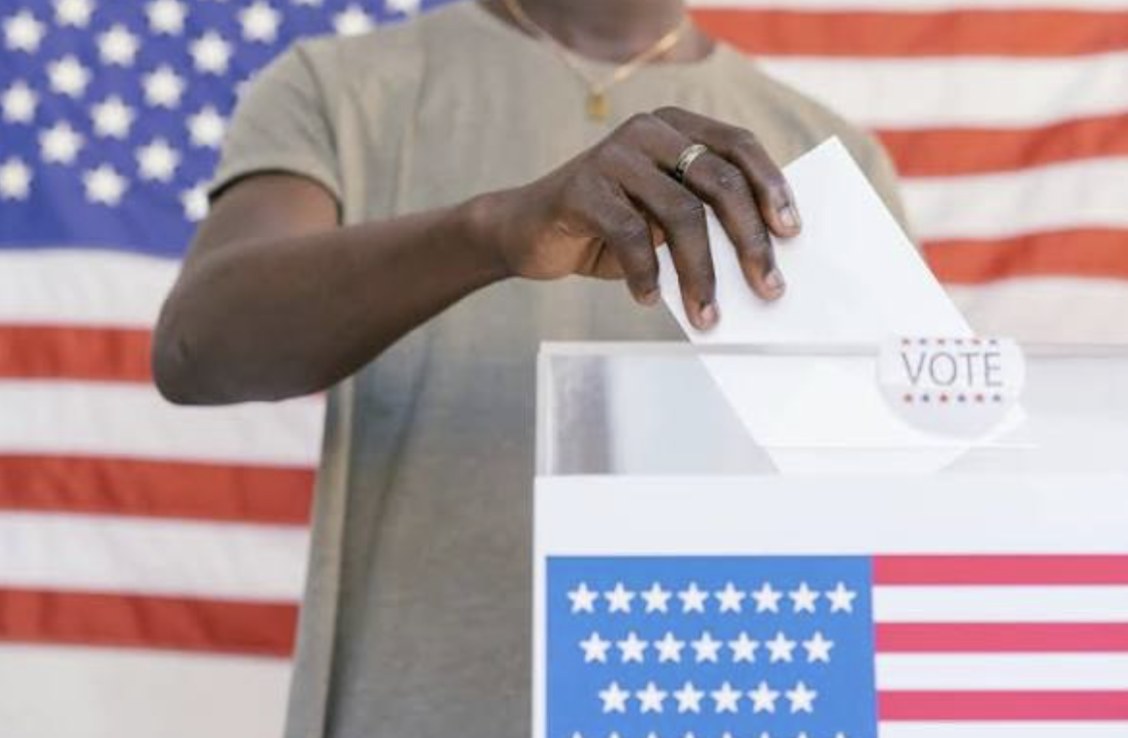
The Primary Election is Tuesday, and some students who can vote don’t even know it.
In Illinois, citizens are allowed to vote in the primaries if they are 18 or will be 18 by the General Election (Nov. 3, 2026). That means that nearly all seniors, as well as a good chunk of the junior class, will be able to participate.
However, there are 17-year-olds who meet this threshold yet are unaware of their eligibility.
“I had no idea the primary elections were coming up,” junior Bridget Lucier said. “Or that I could vote in them!”
Indeed, as long as they are registered, 17-year-olds who make the cut off are welcome at the polls. When it comes to registration, there are several options. Many teenagers may have pre-registered for voting when they received their driver’s license. If not, registration is available in-person at the polling location.
Despite the common misconception that voting is off-limits until one is 18, 17-year-old voters still have influence. In past years, researchers have even found that the turnout of teenagers at the polls exceeded that of other ages. One study conducted in Chicago during the 2014 primaries (a historically low year) showed that registered 17-year-old girls had an 18.5% turnout rate. This number exceeded the rate of every other women’s voting age group up to age 54.
This means that young voices have been making an impact on the nation for years.
At LFHS it’s no different. Among LFHS students, election participation is very prominent. Out of 86 surveyed juniors and seniors, 57% of them (49 students) are eligible to vote. Of those 49, 34 students expressed that they already had, or were planning to, vote. This percentage is way higher than the average turnout rates among teenagers across the nation.
Senior Sydney Keck was one of the seniors that jumped at the chance to vote. She went to the polls days before the actual election date. Keck expressed that partaking in the chance to vote is extremely important.
“It’s a great way to perform your civic duty and support our democracy,” said Keck.
However, not everyone agrees on the presence of teenagers at the polls. The growing engagement of young voters in recent years has sparked debate about whether teenage citizens are ready for the responsibility.
One side argues that a teenager’s prefrontal cortex, the part of the brain that allows them to think through decisions, is not fully developed, so their decisions are less informed.
On the other hand, many sources continue to emphasize the importance of young voters, saying their voice is needed to bring fresh approaches and multifaceted ideas to the U.S. democracy. This is heavily influenced by previous research showing that Gen Z is one of the most diverse groups of individuals in history.
Both opinions mention an important factor—being an informed versus an uninformed voter. “How much do you need to know before casting a ballot?” is a question that citizens, legislators, and educators have been asking around the world for decades.
According to the Center for Civic Engagement at Illinois State University, an informed voter is someone who is knowledgeable about each candidate’s position on major issues, as well as someone who can ignore intentionally persuasive factors when making their decision.
Younger voters, who have less experience in civic engagement and have had less time to solidify their political stances, are often more prone to outside influences. One study found that 44% of Gen Z-ers said social media was the most influential factor when it came to their political opinions. This leads some to worry that teenagers’ votes may not be well informed.
Nevertheless, there are endless opportunities, easily accessible to students, to become more knowledgeable about candidates and their agendas.
Even classes at LFHS, such as AP Government, have included election information as part of their curriculum.
“We did an assignment where we had to research candidates for the Primary on both the Democratic and Republican sides,” said Keck.
For those not enrolled in AP Gov, there are countless online resources offering nonpartisan information, some examples being Vote411 or Ballotpedia.
And for eligible students, the most important step may be the simplest one: showing up to vote.