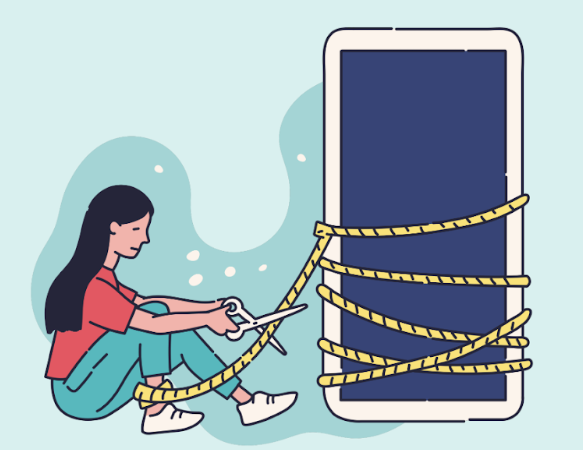
The world’s largest social media companies are being put in the hot seat this month as they take the stand against lawsuits accusing them of purposely designing addictive platforms that harm adolescents’ mental health.
This sparks the question: is social media affecting LFHS students’ well beings?
The science behind social media can make the apps seem irresistible, and whether people notice their attachment or not, it has found ways to infiltrate people’s daily routine, sleep schedule, and decision making.
“When a person is on social media and receives notifications or new content, the brain releases dopamine, which reinforces the behavior,” said AP Psychology teacher Mrs. Julie Harris. “Because social media pays out on a variable schedule, people, especially teens with developing brains, repeatedly check social media for that reinforcement. Adolescents, whose prefrontal cortex is still developing, are more sensitive to this reward.”
Extending its effects past addiction, research points to these social media giants causing elevated levels of depression and anxiety.
“Research finds people with depressive symptoms often compare upward when they view social media. They compare themselves to those who are in an elevated, idealized position,” said Mrs. Harris. “Unfortunately, this becomes a harmful cycle where upward comparison contributes to more depressive symptoms, including feelings of inferiority and inadequacy, which leads to further negative self evaluation.”
The lawsuits fall under the category of “Social Media Adolescent Addiction/Personal Injury Products Liability Litigation.” In short, these lawsuits focus on the design of the platforms. Allegedly, the giants are capitalizing on the addictive nature of the apps and designing algorithms that pose a threat to users’ mental health, specifically affecting sleep, body image, and depression. Problems that social worker Mr. Dan Maigler believes are prevalent in Lake Forest.
“I see a number of kids who have body dysmorphia or other things like that who are extremely triggered by social media. And I’ve noticed that we see certain high periods of this particularly around spring break and dances when pictures are being posted that allows comparison to get to a toxic level”, said Mr. Maigler. “This is because people aren’t seeing relatable pictures…because nobody posts their negative pictures.”
Additionally, the lawsuits emphasize minors’ high screen times on the app which can lead to sleep deprivation, attachment, and allegedly contribute to problems socializing. In some cases, the time spent online becomes so excessive that it’s no longer in the control of the user.
In a survey conducted by the American Academy of Pediatrics, teenagers ages 14-17 average 8 hours and 39 minutes of media use per day.
“I feel like my life gets taken over by social media,” said senior Josie Irvin. “If my phone is sitting next to me, it feels like I have to be on it and tapped into what other people are doing. It’s exhausting.”
In addition to addiction and exceedingly high screen times, social media can have a direct impact on high school students’ self worth and self doubt in a unique way: the college search process.
“The area that has actually been most toxic is in regard to college admissions. Yes, every person should be able to celebrate getting into their dream school and post [about] it, but for every other kid who is waiting to hear back, they get hit with that feeling of comparison and illusion that everybody is getting into all of these great schools and [they’re] not,” said Mr. Maigler. “It leaves students feeling depressed and like a total loser. I’ve even seen people who struggle to enjoy the holidays because of the anticipation of getting into colleges and waiting to see what people will be posting.”
One way that social media affects high schoolers may not be obvious: they are falling into habits of watching content that is addictive in itself which keeps them from getting a proper amount of sleep.
“It has become a habit that every night before I go to bed, I have to watch a video. Usually I fall into a trap of watching competitive eating videos,” said an anonymous LFHS student.
Trying to avoid this addiction, some students have decided to reclaim their social media usage.
“For Lent, I am setting a 45- minute limit on TikTok because I’ve noticed that it leaves me feeling like I wasted time and leaves me feeling down,” said senior Elizabeth Specketer. “In general, social media keeps me from feeling productive.”
From comparison, body image struggles, to even an addiction to competitive eating videos, LFHSake Forest High School sees the effects of social media daily. Now, what is the community’s next step to counteracting the bad habits and insecurities that social media may contribute to?
“I’ve never heard of people feeling good after spending hours on social media,” said Mr. Maigler.